How to Calculate and Interpret the Progressed Chart?
Contents
- What Does a Progressed Chart Mean?
- What Is a Progressed Chart?
- What Does the Progressed Chart Reveal?
- What Is the Purpose of a Progressed Chart?
- How Is a Progressed Chart Calculated?
- How to Interpret a Progressed Chart?
- Progressed Chart Interpretation
- The Difference Between the Progressed Chart and Transits
- The Most Effective Way to Use the Progressed Chart
Your natal chart reveals the “master plan” of your life: your character structure, tendencies, potentials, and long-term themes. Yet what most people truly wonder is this: “Exactly what phase am I in right now? What is changing within me? Why don’t I see certain things the way I used to anymore?” One of the most powerful answers to these questions comes from theprogressed chart(the technique of the progressed chart).
Before you begin reading, visit our progressed chart calculation page by clicking here to calculate your own chart.
In this article, we will clarify the question “what does a progressed chart mean” and explain the logic of “what is a progressed chart” in a simple yet profound way. Then we will address, step by step, the questions “what does a progressed chart show”, “what is a progressed chart used for and most importantly, “how to read a progressed chart”. In the final section, we will establish a real interpretive framework: when interpreting a progressed chart, which indicators reveal the “main theme,” which ones refine the “timing,” and how to weave them together with the natal chart into a meaningful story.
If you have not previously generated your natal chart before reading this article, first birth chart calculator obtaining your basic chart from the page will make things much easier for you. If you would like to verify your Ascendant sign, the ascendant sign calculator page, and if you would like to quickly check your Sun sign, the sun sign calculator pages will also be helpful.
What Does a Progressed Chart Mean?
In astrology, the word “Progress” generally corresponds to what is called “ilerletme” in Turkish. The most common Turkish equivalent is progressed chart. Therefore, the most practical answer to the question “what does progressed chart mean” is this: It is a method that allows you to see your natal chart in a “matured over time” form, calculated through a specific technique.
This method describes “inner development” rather than momentary influences in the outer world. While transits are more like weather conditions coming from outside, the progressed chart is more like a “change of seasons.” It is very powerful for capturing processes such as something within you maturing, changing direction, the birth of a new identity, or the closing of a chapter.
What Is a Progressed Chart?
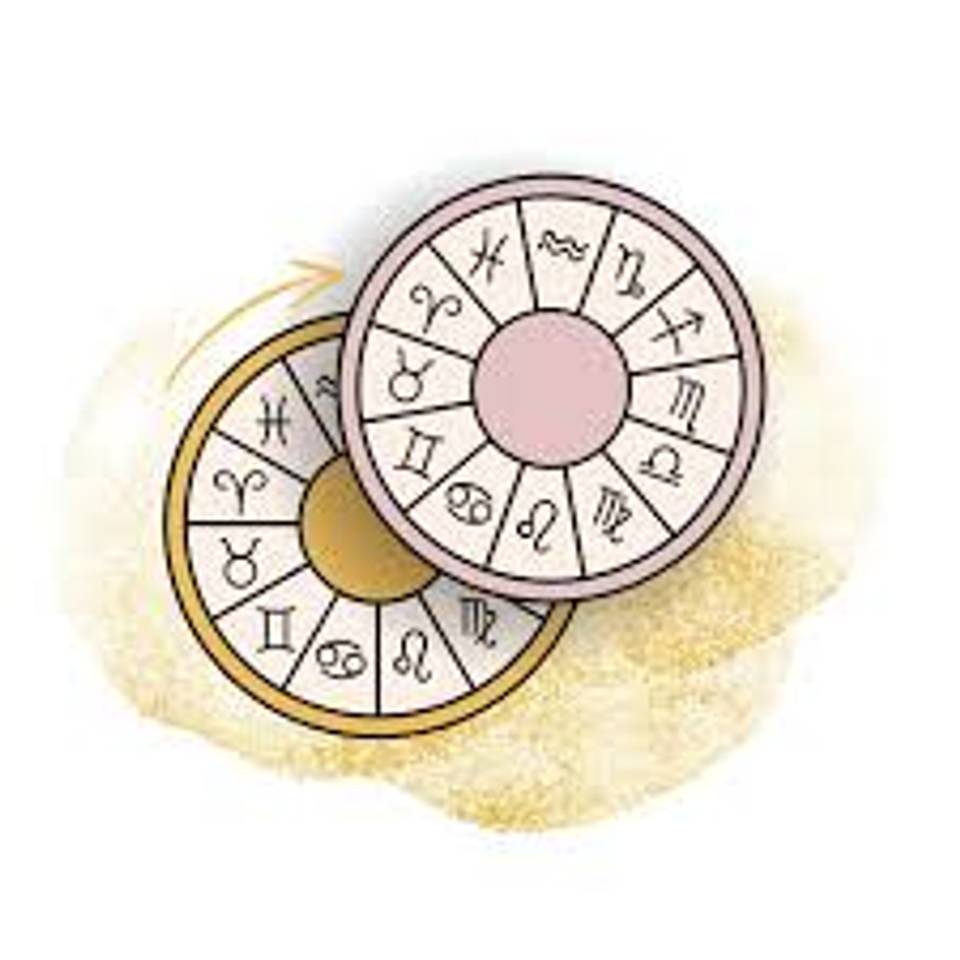
What is a progressed chartTo correctly understand this question, it is necessary to know the fundamental logic of the technique. The most commonly used progression technique is “secondary progression,” and it is based on the following principle:
The first day after birth is considered to correspond to one year of your life.
So if you are 25 years old, the positions of the sky on the 25th day after your birth are taken as your “progressed” chart and symbolize the general inner atmosphere of your 25th year. This chart does not replace the natal chart; it complements it. If the natal chart is a fixed core, the progressed chart is a map that shows the direction in which that core unfolds over time.
There is a very critical nuance here: A progressed chart does not “indicate events on its own.” It primarily reflects psychological maturation, shifts in attitudes, changes in needs, and becoming “ready” for certain matters. Therefore, progressed charts are extremely valuable for personal awareness and for analyzing specific periods.
What Does the Progressed Chart Reveal?
“What does the progressed chart reveal?” In a single sentence: It reveals the themes that grow and mature within you over time.
Many people attribute major changes in their lives to external events: a new job, a new relationship, moving, a breakup. Yet most of the time, an inner preparation begins before the outer event occurs. The progressed chart is precisely the map of this inner preparation.
The progressed chart provides particularly clear signals on the following matters:
The progressed position of the Sun describes the area of life into which your identity is evolving and the values that are beginning to guide your actions. The progressed position of the Moon shows where your emotional needs are concentrated, what your heart is drawn toward, and the sphere in which your need for inner security is shifting. Progressed Mercury reflects the transformation of your way of thinking, your decision‑making style, and your mental priorities; Venus indicates the maturation of your values, your relationship language, and your field of attraction; and Mars reveals how your motivation, courage, and style of asserting yourself and engaging in struggle are changing.
In short, the progressed chart provides the periodic answer to the question, “Who am I now, and what do I want?”
What Is the Purpose of a Progressed Chart?
“What is the purpose of a progressed chart?” is the question that reveals the true value of this technique. A progressed chart is especially useful in the following situations:
If you haven’t felt like the same person for a long time; if your goals, tastes, and expectations in relationships have changed; if you’ve noticed that you can no longer tolerate certain things or that you’ve recently become enthusiastic about new interests, the progressed chart explains the reason for this in the language of astrology.
In addition, the progressed chart provides a very powerful “background” in therapy processes, life cycle analysis, career direction changes, and the maturation of relationship dynamics. Transits open a door for you from the outside; but in order to pass through that door, you must be ready on the inside. The progressed chart is one of the indicators of this inner readiness.
How Is a Progressed Chart Calculated?
Progressed chart calculation fundamentally requires your birth details: date of birth, time of birth, and place of birth. The birth time is especially important, because house systems and aspect precision change according to the time of birth. If the time is not accurate, the progressed Ascendant and house placements may also shift, which weakens the backbone of the interpretation.
The logic of the calculation works as follows:
First, your age is determined. Then, starting from your date of birth, the chart is progressed by as many days as your age in years. For example, for age 30, the reference point is 30 days after your birth. The sky positions on that day are taken as the “progressed planets.” These progressed positions are then placed into the houses of your natal chart, or alternatively, a progressed house system is calculated separately (this varies depending on the method used). Modern calculators perform this process automatically for you; the only thing you need to do is enter the correct data.
There is a detail here that can be confusing: although the basic principle of the progressed chart is “one day = one year,” the exact calculation methods and speeds used can vary slightly between different schools. Even so, secondary progressions are, in practice, the most commonly used method and the one that yields the most consistent results; in this article, we primarily take that as our basis.
How to Interpret a Progressed Chart?
“How to interpret a progressed chart?” The most accurate answer to this question is not to extract meaning from random indicators, but to first grasp the main theme and then the timing. The biggest mistake in progressed charts is trying to turn every small detail into an event prediction. Yet the true focus here is the inner process.
A solid sequence of observation proceeds as follows:
First, the progressed Sun is examined. The Sun is the core of your identity; the sign of the progressed Sun, and especially the house it falls into in your natal chart, shows in which area of life your sense of self is being strengthened during that period.
Next, the progressed Moon is examined. In interpreting the progressed chart, the Moon does not indicate a single year, but rather sets the rhythm of phases and periods. The progressed Moon changes signs approximately every 2.5 years and completes a full cycle in about 27–28 years. The Moon’s sign and house changes clearly describe the turning points at which emotional needs shift direction.
The third step is the major aspects formed by the progressed Moon. The aspects the Moon makes to planets such as the Sun, Saturn, and Uranus periodically reveal processes of emotional maturation and decision-making.
The fourth step is progressed Venus and Mars. The language of relationships, attraction, motivation, courage, and style of conflict becomes clear through this pair. In particular, a sign change of progressed Venus or its forming strong aspects with natal planets can profoundly transform one’s perception of relationships.
The fifth step is the progressed Mercury. Education, communication, shifts in ideas, and changes in mental direction are seen here. Mercury’s direct and retrograde motions (progressed retrograde cycles) can, in certain years, create a theme of “rethinking and breaking old mental patterns.”
The sixth step is to interpret how the progressed aspects relate to the natal chart. A progressed chart does not carry meaning on its own; it gains significance only when it is placed upon the birth chart.
If you follow this sequence, how to interpret the progressed chart will no longer be a “complex technique” but will turn into a “meaningful reading pattern.”
Progressed Chart Interpretation
Let us move on to the most critical part: progressed chart interpretation. The aim here is not to say “this will happen,” but rather to be able to say “during this period these themes are maturing, these doors are opening from within.”
Progressed Sun
The progressed Sun moves slowly. Therefore, when the Sun changes signs, it marks a major turning point; it symbolizes an identity transformation that unfolds over many years. More frequent than a sign change is the progressed Sun changing houses in your natal chart and forming major aspects with natal planets. These moments can be turning points when the direction of your identity goals shifts, when you feel, “from now on, this is what I want to grow and develop in my life.”
Progressed Moon
The progressed Moon is like the heartbeat of the progressed chart. The Moon’s sign changes alter the tone of your mood and your needs. Likewise, its house changes shift the area of your “emotional investment.” For example, when the progressed Moon moves into the 10th house, people become more sensitive about career visibility; success, recognition, and goals gain greater emotional importance. When the Moon moves into the 4th house, the need for home, family, roots, and inner security may increase.
The hard aspects formed by the progressed Moon sometimes bring an emotional threshold for growth. During these periods, one feels, “I simply cannot go on like this anymore,” because the Moon carries our emotions. This emotional threshold often accelerates the outer decision.
Progressed Venus and Mars
Venus and Mars transform the way you relate and what drives you. When progressed Venus changes signs, what you seek in the exchange of love can shift. Where you once longed for an intense and passionate attraction, later you may desire a calmer and more secure bond—or the other way around. When Mars changes signs, your style of asserting yourself and facing challenges changes; your motivation may become more direct, more strategic, more patient, or quicker and more impulsive.
In particular, aspects formed by progressed Venus to your natal Moon, natal Venus, or natal 7th house ruler can internally amplify the relationship theme. This does not mean that “a relationship is guaranteed,” but it does mean that “your need for relationship and your value system are evolving during this period.” This is precisely where the power of the progressed chart lies: it captures the inner preparation that takes place before the event.
Progressed Mercury
Progressed Mercury describes the maturation of your thought system. In some periods you learn faster, write more, speak more; in other periods you turn inward, sift through your ideas and rebuild them. When Progressed Mercury contacts natal Saturn, it brings mental discipline and seriousness; a Uranus contact can bring mental breakthroughs, sudden realizations, and new perspectives.
Progressed Aspects and Periodic Triggers
The progressed chart provides the “background,” yet in certain periods this background suddenly becomes visible. The reason for this is most often that transits (especially Saturn, Jupiter, Uranus) activate your progressed indicators. Therefore, the best analysis is the triad of progressions + transits + natal. Progressions are the “preparation,” transits are the “trigger,” and the natal chart is “your inborn nature.”
This approach what is the purpose of the progressed chart answers the question very clearly: It is a tool that explains not only “what will happen?” but also “why am I ready for this right now?”.
The Difference Between the Progressed Chart and Transits
Transits interpret the current positions of the planets in the sky in relation to your natal chart. These are more concerned with “external conditions.” The progressed chart, on the other hand, reveals your pace of inner maturation and your personal cycles. Transits can come and go quickly, while progressed influences work more slowly yet more profoundly.
Let’s consider an example: Transiting Jupiter may be bringing you an opportunity, but if you are not inwardly ready, you may miss that opportunity. The progressed chart describes this state of “readiness.” That is why, when many people say, “The opportunity came, but I couldn’t make use of it,” we see in the progressed chart that their inner direction is actually in a different place.
The Most Effective Way to Use the Progressed Chart
The most effective way to use the progressed chart is to treat it not as an “annual forecast” but as a “period analysis.” Ask yourself the following questions:
Which area of my life is currently expanding? Which inner need is growing stronger within me? Which identity am I releasing, and which identity am I building? Why do I no longer have patience for a certain matter? Why is there a new excitement about something in my life?
The answers to these questions are often concealed in the house and sign changes of the progressed Moon, in the progressed Sun’s activation of a new house theme, or in the transformative cycles of Venus and Mars.
If your basic chart is not clear, your progressed readings will also remain vague. Therefore, to first solidify your natal chart, it is very helpful to use the natal chart calculation, and to clarify your Ascendant, the Ascendant sign calculation pages. To quickly see the core theme of your Sun sign, Sun sign calculation is also a good place to start.


