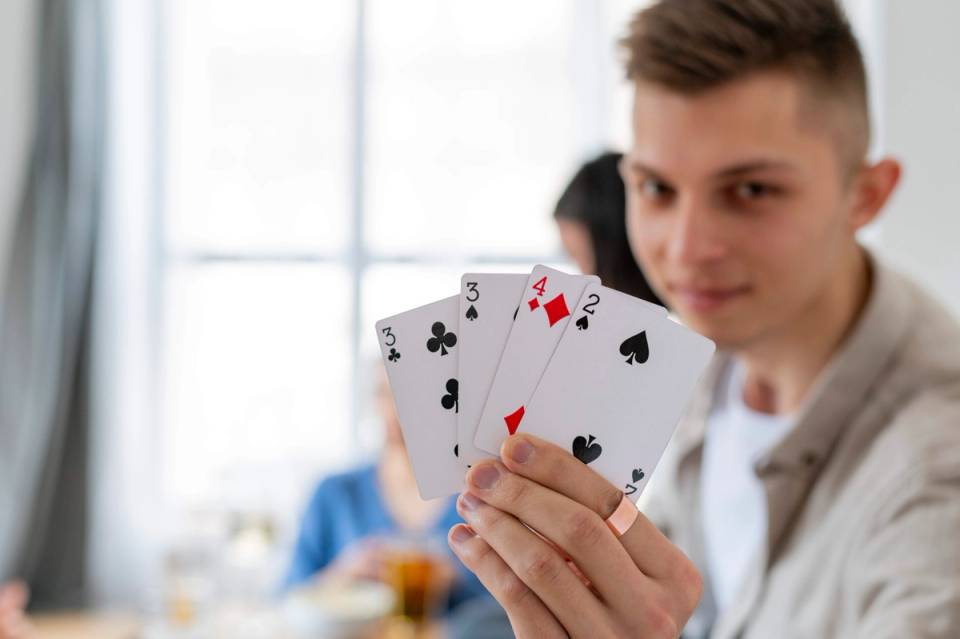
How to Read a Playing Card Fortune? A Step-by-Step Guide
That classic deck that ends up tucked away in drawers, on summerhouse tables, or put aside after big family dinners… Playing cards have been used not only for the thrill of games, but for centuries as tools of insight, intuition, and guidance rituals. For those who do not have access to a Tarot deck, and even for those who are just becoming acquainted with the symbolic depth of Tarot, learning the language of a simple deck of playing cards is an extremely practical and effective gateway. In this article, I will build the foundations of cartomancy from scratch, examine the symbolic layers of the cards one by one, share step‑by‑step methods you can apply, and demonstrate the logic of interpretation through a real sample spread. Throughout the text, if you find yourself saying, “I also want to see my astrological background,” I will frequently remind you of the links to calculate your own celestial chart with the zodiac sign calculator, to understand the first impression you present to the outer world with the ascendant (rising sign) calculator, and to see all of your celestial placements in full with the free birth chart report; because symbolic languages nourish one another, and as your insight deepens, the language of divination also becomes clearer.
What you need to read a playing card fortune is simple: a standard 52-card deck, a clear and single‑focused question, a brief ritual, and the intention to read the story the cards tell as a whole. The simpler you begin, the more powerfully your method will work. Fortune-telling is not a castle that offers a “guaranteed future,” but a compass that makes it easier to find direction in the present. When you remember that the cards whisper less in sharp answers like “yes–no,” and more about the direction of circumstances, the strength of your intention, and the timing of the steps that can be taken, this practice quickly turns into a reliable tool of insight.
The first step is always preparation. To establish a brief connection with your deck, it is enough to take a few deep breaths, gently warm the cards between your hands, and condense your question into a single sentence in your mind. If possible, let this sentence contain a time frame, such as: “Should I change my job within the next three months?” As the mind becomes clearer, the reflection of the cards also becomes clearer. There is no need to exaggerate the way you shuffle; you can shuffle with one hand, spread the cards on the table and blend them, or cut the deck into three piles. What matters is that you keep your intention uninterrupted. This preparation focuses the energy in playing cards just as it does in tarot; it is the cornerstone of the reading.
The symbolic language of the playing card deck flows along two main axes. The first is the axis of suit and series; hearts, diamonds, clubs, and spades open into the four fundamental domains of life. The warm and gentle current of hearts points to emotions, love, family bonds, the search for closeness and peace. When this suit appears, the matter usually concerns relationships, heartbreaks, the need for compassion, or a healing emotional climate. Diamonds form the axis of money, goals, practical work-related issues, and the desire for material security; whenever one seeks to reach a target, negotiate, establish order, and obtain tangible results, the rhythm of diamonds becomes pronounced. Clubs trace the path of action and growth; dynamics such as making plans, learning new skills, initiating innovations, and taking movement gather in this suit. Spades, on the other hand, speak of confronting what lies in the shadows, of obstacles, sharp decisions, and at times the necessity of endings. The spade suit reminds us of the healing power of saying “No,” the restorative effect of setting boundaries, and the courage to free ourselves from the old in order to make room for the new.
The second axis is numbers and court cards. Aces in each suit indicate a fresh beginning, the introduction of a new theme, the moment of the “spark.” Twos represent balance and the dynamics of dual relationships; threes, cooperation, growth, and creative flow; fours, foundation and stabilization; fives, conflict and change; sixes, harmony and ease of movement; sevens, turning inward and mystery; eights, motion and momentum; nines, the process approaching completion; and tens, the clear threshold of a cycle’s closure. Court cards add character and tone to the story: the Page is youthful and a messenger, carrying the feeling of “a message has arrived, an idea is sprouting.” The Queen brings a note of mature intuition, compassion, and relational wisdom; the King embodies authority, governance, and the energy of making the final decision. These figures may sometimes represent real people, and at other times the voice of an inner tendency; this shifts according to the narrative context.
When you start reading the cards, make it a habit to see the relationships rather than the individual meanings. Let’s say your first card is the 6 of Hearts; this opens a tone of nostalgia, peace, and emotional ease. The next card, the 5 of Spades, may indicate conflict or misunderstanding, and the following Ace of Diamonds can point to a new arrangement or an opportunity for a practical new beginning.
What matters here is that the three cards form a sentence: “You’re coming from an emotional comfort zone; today there is tension; the solution lies in establishing a clear plan.” When this sentence merges with the context of your question, it gives direction.
The same trio, for the question “Should I go back to the relationship?”, turns into a more nuanced message such as: “You remember the previous peace; today there is fog; unless a realistic framework is established, the same cycle will repeat.” In the language of playing cards, context is everything.
The most suitable spread for beginners is the three-card past–present–near future reading. It is a short yet intense mirror. Shuffle the deck, you may cut it with your left hand, and then lay out three cards from right to left. The first card shows the influence carried over from the past, the second reflects the current situation, and the third describes the likely direction if conditions remain unchanged. With this method, you can give yourself a quick check-up and notice the adjustment you need. Once you get a bit more accustomed to the process, you can also try the five-card horseshoe spread: the first card is read as past influence, the second as obstacle, the third as resource, the fourth as advice, and the fifth as possible outcome. Playing cards become sharper the simpler you keep them; more cards do not always mean more clarity, so in the early stages it is healthiest to work in a minimal yet focused way.
The unseen half of divination practice is hygiene and ethics. Centering the mind before each reading, protecting the field of meaning, and closing the reading with a brief expression of gratitude to complete the energy cycle all help to clarify the interpretation. Asking the same question over and over scatters the intention; drawing cards again before you have translated the message of the spread into action only creates fog. Also, divination can never replace professional consultation, especially in areas such as health, law, and finance; what the cards express is the energy of the circumstances and your psychological readiness, reflected through symbolic language. Furthermore, not asking questions on someone’s behalf without their explicit consent is a cornerstone of divination ethics; cards work best where a question can be consciously and willingly asked.
Now let’s make the process concrete step by step with an example. Let’s assume your question is: “Would it be beneficial for me to change my job within the next three months?” You shuffled the cards with a few deep breaths, cut the deck and drew three cards: 9 of Diamonds, 7 of Spades, Jack of Clubs. The first card tells you that you are at the threshold of closing a cycle, that a financial or career-related goal is nearing completion. This card alone does not say “finish and leave”; it indicates that you are at a threshold, and that a similar theme that has been going on for a long time is actually about to be completed. The second card, the 7 of Spades, brings to light inner hesitations, hidden anxieties, perhaps problems at the office that are not openly discussed, or knots of doubt within yourself. Since this is the “present” card, we can interpret it as describing the current energy of uncertainty and the need to create some distance. The third card, the Jack of Clubs, says that a new flow based on intellect and communication, a more dynamic and learning-oriented environment, is calling you. The Jack card brings “a mature yet graceful proposal”; this may be a female figure, a mentor, an HR representative, or the flexible, social side of your own inner voice. Together, this trio forms the sentence: “You have reached a threshold; examine your doubts honestly; step toward a direction focused on learning and movement.” So, is the answer to the question “right away?” present in the cards? Playing cards do not like to give timing; but the “completion threshold” of the 9 of Diamonds and the emphasis on “new networks and learning” of the Jack of Clubs indicate that your move will ripen through a process of planning and networking. At this point, if you would also like to see the celestial rhythm of your career, I suggest you check the 10th house themes and work transits according to your Ascendant on the free birth chart report page; when the message of the reading merges with the timing of your chart, the path becomes clearer.
There is another practical technique with playing cards for short “yes–no” type answers. You can draw a single card and read its weight according to suit and tone. Hearts and clubs tend to indicate a “yes,” spades carry a clear “no/not yet” tone, and diamonds frame a “yes, but with a practical condition.”
This is a rough compass; the numerical value of each card refines the message. For example, the Ace of Clubs is a strong yes and a spark of initiation, while the 7 of Clubs means “yes, but finish the details first.” The 10 of Spades warns, “do not say yes before this cycle is complete”; the 2 of Diamonds adds, “yes, provided there is partnership and an agreement step.” This brief technique is especially useful at quick decision thresholds; still, supporting what the single card says with a mini three-card spread (obstacle–resource–advice) will make your reading more mature.
As you build a relationship with the cards, your rituals become more personal as well. Some people like to give a brief knock and cut the deck into three piles before each reading; others prefer to spread the cards out on the table and draw with the left hand. What matters is creating a small routine you can call “my rhythm” and keeping it consistent. When storing the cards, a clean pouch, a short expression of gratitude, and a closing sentence for your intention send a message to your subconscious that “the session is over.” This way, you come to the next reading with a fresh energy.
In playing card divination, the issue of “reversed cards” is not as pronounced as it is in tarot; due to the symmetrical structure of the deck, you can work perfectly well without distinguishing upright and reversed. Still, if you wish, you may assign a meaning such as “reduced weight” or “blocked energy” to a card that appears reversed; for example, a reversed Ace of Diamonds can be read as a delay in a material beginning, or as a plan not yet taking concrete form. Deciding on this preference from the outset helps maintain consistency in your interpretations. For timing, you can also make use of the rhythm of the suits: Clubs indicate speed and the short term, Hearts point to emotional maturation and the medium term, Diamonds to practical organization and a planned timeframe, while Spades call for waiting until the end of the process. This is not a rigid rule, but rather a method that calibrates your intuition.
A strong divination practice deepens through consistent record‑keeping. When you briefly note each card you draw, the very first sentence that comes to you, and the step you take, you’ll be able to look back after a few weeks and see how cards and events have matched up.
Over time, you begin to recognize the emotional tone that each suit awakens in you and, instead of “being afraid when you see a spade,” you reach a calm state where you can say, “there is a call for cleansing and clarity here.” This calmness takes divination out of the realm of prophecy and turns it into a practice of awareness. If, during the same period, you would also like to roughly follow your astrological calendar according to your Ascendant, you can view the main transits and Moon phases from the birth chart calculator screen and layer your insights on top of one another. The celestial rhythm and the language of the cards tell the same story in two different alphabets.
You can also use the playing card reading very effectively for relationship questions. In a question like “Should I reconcile?”, when the Two of Hearts appears with the Seven of Spades, you understand that along with longing, the issue of trust and boundaries has not been resolved; if the Ace of Diamonds shows up as the third card, it becomes clear that you must set a practical framework before you can say “yes.” In a question like “Where is this new connection headed?”, the Three of Clubs and the Jack of Hearts indicate a cheerful flow of flirting and lively communication, while the Four of Spades whispers, “Don’t rush, strengthen the emotional foundation.” In such moments, the reading doesn’t just say “yes/no”; it also maps out an answer to the question “How can it happen?”
Of course, divination is a practice of insight that extends into every area of life; however, it should not be your sole basis for critical decisions. If you have any concern about your health, seeing a doctor; if you are about to take a financial step, putting the terms into a contract; if you are dealing with legal matters, seeking expert advice—these are the mature ways to ground the message of the reading. The cards are a mirror that helps you hear the “voice from within” more clearly; they cannot take your responsibility away from you, but they can make a more conscious, more solid step possible.
Finally, if you enjoy working with playing card divination and astrology together, you can create a small path of exploration for yourself. Your Sun sign describes your basic tendency and fuel; to clarify this, first complete the sun sign calculator step. The face you present to the outer world, your first impression, and your instinctive attitude in moments of decision are colored by your Ascendant; you can find it in just a few seconds on the ascendant rising sign calculator page. And to give even deeper meaning to what the cards are saying through the “what, where, how” triad, view all your planetary placements via the free birth chart report; in this way, when the theme indicated by the reading and the rhythm of your chart work in synchrony, your courage to make decisions will increase.
A deck of playing cards, a calm mind, and an honest intention… That’s all you need. Don’t look for perfection in your first spread; let the cards form the sentences. Boil your question down to a single sentence, shuffle the deck, lay out three cards, and write down the story you see. In the next step, draw an advice card, then create a concrete plan of action. The more you practice, the more vividly the symbols will speak. Divination is not there to seal the future; it exists to shed light on the present, on your insight, and on your actions. If you light this flame regularly, you will see that not only the cards, but also your path, become clearer.