A Clear Answer to Your Question: “Yes or No Tarot” Cards and Their Meanings
Contents
- What Is the “Yes–No Tarot” and When Should It Be Used?
- How Should a Question Be Asked? (The Golden Rule)
- Yes–No Tendencies of the Cards (Experiential List)
- The Power of Posture (Upright/Reversed) and Intention
- My Yes–No Procedure (Step by Step)
- Example: Three Different Scenarios, Three Different Interpretations
- Quick Reference: Yes–No Clues of the Minor Arcana
- Ethics, Free Will, and Timing
- Common Mistakes (and My Solutions)
- Mini Ritual: Yes–No in 3 Minutes
- My Final Word
I know very well those moments when you can’t decide and your mind keeps going back and forth. This is also the question my clients ask most often: “Diana, should I do this or not? What is the universe telling me?” This is where the Yes–No Tarot spread, when used with the right questions and the right intention, becomes a surprisingly clear and guiding tool. It can be done with a single card, or in short variations supported by two or three cards; but at its core, the purpose is to clarify your inner voice and offer a compass at a moment of decision.
Below, I share the methods I’ve developed over many years of experience (and plenty of practice), the Yes/No tendencies of the cards, and the key tips that will help you get the greatest benefit from this spread. Inside, you’ll also find sample questions, interpretation techniques, the influence of reversed cards, and what you should do when the answer comes up as “maybe.” If you’re ready, let’s begin. By the way, if you’d like to draw cards directly for your own question, my tool is here: Tarot Yes No Reading.
What Is the “Yes–No Tarot” and When Should It Be Used?
In classical spreads (such as the Celtic Cross), we see the context of the situation across a wide spectrum. Yes–No Tarot on the other hand is a more minimal and decision-focused technique. I generally use a single card; if needed, I draw a clarifier card. It works wonders with directive and clear questions such as “Should I continue this relationship?”, “Should I accept this job offer?”, “Is it the right time to move now?”.
Remember: Tarot is not a machine that directly says “yes” or “no.” Theenergy, symbolism, and connection it forms with the questionoffer us a strong tendency along the yes–no axis. In other words, the answer is completed through interpretation, intuition, and context.
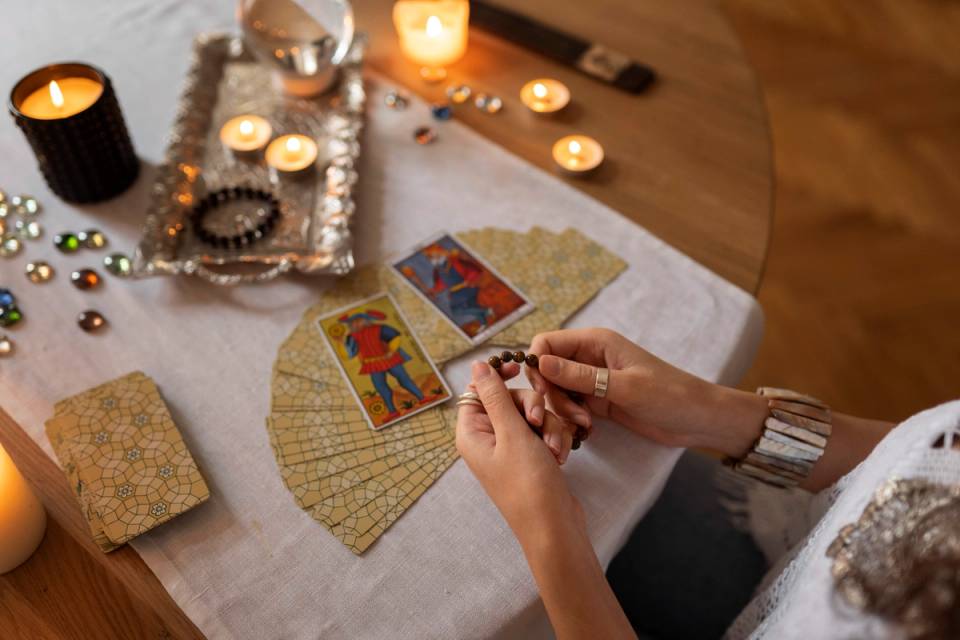
How Should a Question Be Asked? (The Golden Rule)
The most critical factor determining the accuracy rate of Yes–No readings is the clarity of the question.
- Be clear and directive:“Should I do X?”, “Is Y right for me today?”
- Add a time frame:“Is it right to do X within the next 3 months?”
- Single focus: One question per reading. Do not mix two separate topics at the same time.
- Quiet the emotional noise:A few deep breaths and a brief statement of intention can work wonders.
Sample good questions:
- “Is it auspicious for me this month to accept this job offer?”
- “Is it the right decision for now to continue my relationship?”
- “Is buying this house before the end of the year suitable for me?”
And after asking your question, you can proceed from here: Yes or No Tarot Reading.
Yes–No Tendencies of the Cards (Experiential List)
The classifications below combine both the tendencies of the classical schools and my own long years of practice. Still, the context of the question, the card’s position (upright/reversed) and the accompanying clarifying card may alter the outcome.
"Yes"-Leaning Cards
- Sun – Clear success, illumination, a visibly positive outcome.
- The World – Completion, the auspicious end of a cycle, reaching the goal.
- The Star – Hope, healing, progress in the right direction; a “yes, but with patience throughout the process” tone.
- Power– To triumph through inner balance; a patient yes.
- The Empress – Abundance, development, growth; a powerful yes for relationships and creative projects.
- The Emperor – Order, structure, authority; a yes in career and material matters.
- Judgement (Court)– Awakening, second chance, “yes, but heed the calling.”
- Ace of Wands– Ignition, initiating energy; a yes for new ventures.
- Ace of Cups – Emotional renewal; yes for relationships and inner fulfillment.
- Nine of Cups – The wish card; “Yes, you are close to what your heart desires.”
- Ten of Cups – Peace, emotional fulfillment; a strong yes in matters of family and relationships.
- Three of Wands – Horizons expand, positive expectation; “yes, you are on your path.”
- Four of Wands – Stability, celebration; a yes regarding settling down/marriage/home matters.
- Nine of Pentacles – Enjoying the fruits of your own labor; yes for individual goals.
- Ten of Pentacles– Long-term security; yes for money, property, and family.
- Six of Wands– Victory, recognition; a yes in competitive matters.
Cards Inclined to Say “No”
- The Tower – Sudden, unexpected collapse; for now, no (the foundations are not solid).
- The Devil – Addiction, vicious cycle; “no—first, recognize the chain.”
- Ten of Swords– A process that has completely ended and been exhausted; a definite no.
- Three of Swords – Disappointment, hurt; a no in emotional matters.
- Nine of Swords – Overwhelming anxiety and mental noise; heal yourself first, no.
- Five of Pentacles– Lack, being left out in the cold; a no regarding financial risks.
- Five of Wands– Conflict, discord; if there is no compromise, the answer is no.
- Seven of Swords – Hidden agenda, deception; “no, or proceed with caution.”
- Five of Cups – Loss of focus and mourning; not the right time (no).
“Maybe / Neutral” (Conditional) Cards
- The Hermit – Withdraw inward, reflect; it calls for time and solitary contemplation.
- Wheel of Fortune – Circumstances are in flux; timing and luck are the decisive factors.
- Moon – Uncertainty, fog; if there is no clarity, wait (most often “maybe/postpone”).
- The Hanged Man – Being in limbo, a shift in perspective; “yes, but later” or “for now, no.”
- Temperance – blending, dosage adjustment; patience and a yes that unfolds over time.
- The Lovers – the crossroads of choice; the quality of the decision determines the outcome (not yes/no, but “make the right choice”).
- Justice – Depending on the situation, “yes, but in a balanced and lawful way”; if reversed, “no / warning.”
Note: Many sources interpret the “Moon” card as a “maybe.” If your question contains an element of illusion, it can also lean toward “no.” Therefore, it is good practice to check it with a confirming card.
The Power of Posture (Upright/Reversed) and Intention
- A reversed card most often indicates that the flow of energy is blocked or delayed, or that the shadow side has been activated. For example, an upright Sun is a strong “yes,” while a reversed Sun says “yes, but there is a lack of motivation and clarity; first address visibility/self-confidence.”
- Formulate your intention sentence briefly and clearly:“Is it for my highest good to make this decision within the next three months?”
- The very first intuitive image and feeling that comes to you after drawing the card is important. Sometimes a single word (e.g., “wait,” “now”) can summarize the entire picture.
My Yes–No Procedure (Step by Step)
- Calm your mind: 5 deep breaths, 20–30 seconds of silence.
- Intention statement: Add the time frame (today/3 months/1 year).
- Draw a single card: Note whether it is upright or reversed.
- If necessary, a clarifier: Only to clarify the topic add one card.
- Write an action sentence: “If I take this step, X will happen; if I don’t, Y will happen.”
- With a calendar: When you get a “Maybe/postpone” result, note down the date to check again.
To try this out in practice: Yes or No Tarot Reading.
Example: Three Different Scenarios, Three Different Interpretations
1) “Should I accept this job offer?” — The World (upright)
Completion, graduation, the fruits of your labor.Yes—especially if it aligns with your long-term goals. When accompanied byJustice (upright), it indicates that the contract/terms are fair, though a careful review is still necessary. Yes, but know your rights in writing.
2) “Is it right to go back to an old relationship?” — Moon (vertical)
Uncertainty, fog, illusion.Maybe/postpone. First, get clear within yourself on the question “why do I want to go back?”. As a confirmation, ifThe Hermit appears, it means it is asking for “solitary reflection, therapy/talking, and time.” For now, sayingno may open the path to a futureyes.
3) “Should I make this investment now?” — The Tower (upright)
Sudden collapse. Current conditions no. Reassess your core assumptions, risk scenarios, and cash flow. If validating Balance appears, I receive the message: “downsize, break it into parts, spread it out over time.”
Quick Reference: Yes–No Clues of the Minor Arcana
- Wands (Fire): Initiative, courage, action. Generally tend toward yes; especially Ace, Three, Four, Six.
- Cups (Water): Emotion, relationship, intuition. Yesis likely, but if the heart is not clear, then “maybe.” Nine and Ten are a strong yes.
- Swords (Air): Mind, decision, conflict.Notendencies toward; especially Three, Seven, Nine, Ten.
- Pentacles (Earth): Matter, money, process.Long-term yes potential; Five is a warning, Nine–Ten indicate a favorable completion.
Ethics, Free Will, and Timing
Tarot does not take away your free will; on the contrary, it enhances the quality of your choices. Even a “yes” tendency can remain stagnant if you do not take action. A “no” tendency, on the other hand, may turn into a “yes” within a different time window after a period of preparation and healing. In critical matters such as health, law, and finance, tarot is not a substitute for professional advice; but it is an excellent companion in helping you discover what you need to ask.
Common Mistakes (and My Solutions)
- Asking the same question over and over: It clouds the energy. Solution: Set a time interval and take action in the meantime.
- Ambiguous question: Instead of “What should I do?”, ask “Should I do Xthis month?”
- Taking a single card out of context: At the very least, use a spread, the context of the question, and a clarifier.
- Thinking a reversed card is “bad”: Reversed can also mean delay, introspection, or reorganization.
If you would like a hands-on practical experience: Yes or No Tarot Reading.
Mini Ritual: Yes–No in 3 Minutes
- Candles/theater are not necessary; intention and breath are enough.
- State your question in a single sentence and specify the time frame.
- While shuffling, silently repeat your question to yourself.
- Draw the card and note your first feeling.
- If necessary, a single confirming card.
- Write an “action sentence” and set a short date.
My Final Word
Yes–No Tarot, a powerful practice that amplifies your inner voice in moments of decision. The cards do not pass a “fated verdict”; they make your inner knowing visible. Sometimes a “yes” opens a door, sometimes a “no” gives you time to search for the right one. And sometimes you receive a “maybe,” which is the most precious call of all: Pause, go deeper, complete the knowing.
If you are ready, let us draw a card for your question: Yes or No Tarot Reading.


